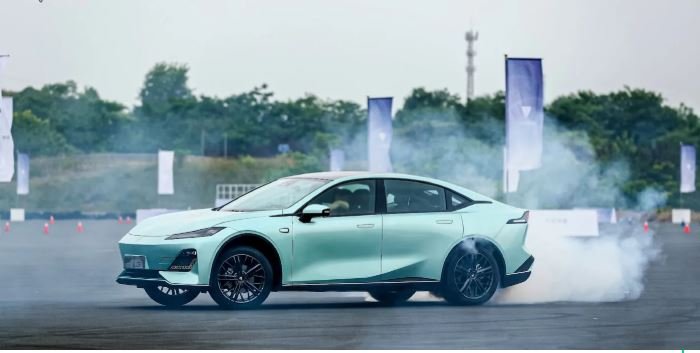
The global electric vehicle (EV) race is entering a game-changing phase, and China is firmly in the driver’s seat. Chinese battery makers and automakers have begun real-world rollout and pilot production of solid-state EV batteries, a breakthrough technology that could deliver up to 1,000 miles (1,600 km) of driving range on a single charge.
If these promises hold, solid-state batteries may finally solve the biggest EV concerns in the U.S. market: range anxiety, charging time, and battery safety.
What Are Solid-State EV Batteries?
Unlike today’s lithium-ion batteries, which use liquid electrolytes, solid-state batteries replace liquid with solid electrolytes. This seemingly small change brings massive advantages:
- Much higher energy density
- Lower fire risk
- Faster charging
- Better performance in extreme temperatures
- Longer battery lifespan
In simple terms: lighter batteries that store more power and last longer.
China Leads the Solid-State Battery Race
Several Chinese giants are already testing or scaling solid-state battery technology:
- CATL – The world’s largest EV battery supplier has confirmed solid-state battery pilot production with energy densities exceeding 500 Wh/kg.
- BYD – Actively developing next-generation solid-state cells for future EV platforms.
- NIO – Testing semi-solid and solid-state battery packs capable of ultra-long range driving.
Chinese regulators are also backing the transition, accelerating commercialization timelines compared to the U.S. and Europe.
Nearly 1,000 Miles of Range: How Is That Possible?
Current EVs in the U.S. typically offer 300–400 miles of range. Solid-state batteries could double or even triple that figure due to:
- Ultra-high energy density cells
- Reduced battery pack weight
- Improved thermal efficiency
- Lower power loss during discharge
Some prototypes already claim 600–800 miles, while next-generation versions under development aim for the 1,000-mile milestone.
For drivers, this means charging once every 1–2 weeks, even with daily commuting.
Faster Charging, Safer Driving
Solid-state batteries aren’t just about range.
Charging Speed
Many solid-state designs support 10–80% charging in under 10 minutes, rivaling gas station stops.
Safety Upgrade
Because there’s no flammable liquid electrolyte, the risk of battery fires is dramatically reduced—an issue that has concerned EV buyers in the U.S.
Better Cold Weather Performance
Solid electrolytes perform more reliably in cold climates, a major win for northern U.S. states.
What This Means for the U.S. EV Market
China’s progress could reshape the global EV landscape:
- U.S. automakers may need to license or fast-track solid-state tech
- EV prices could drop as battery efficiency improves
- Gas vehicles may lose their final advantage: long-distance convenience
Companies like Tesla, Ford, and General Motors are investing heavily in solid-state research—but China is already moving toward mass adoption.
Are Solid-State EVs Available Right Now?
Not for mainstream buyers—yet.
Expected Timeline:
- 2025–2026: Limited production & premium EV models in China
- 2027–2028: Wider adoption, cost reduction
- 2030: Possible global standard for EV batteries
Early solid-state EVs will likely be expensive, but prices are expected to fall rapidly—just like lithium-ion batteries did over the past decade.
The Bigger Picture: A Turning Point for EVs
Solid-state batteries could mark the moment when:
- EVs outperform gas cars in every category
- Long road trips become effortless
- Charging stations become less critical
- Battery replacement anxiety disappears
China’s early rollout shows that the future of electric mobility is arriving faster than expected.
Final Thoughts
With solid-state EV batteries promising nearly 1,000 miles of range, ultra-fast charging, and unmatched safety, the EV revolution is entering its most exciting phase yet. China’s aggressive push may force the rest of the world—especially the U.S.—to accelerate innovation or risk falling behind.
One thing is clear: the age of compromise in electric vehicles is ending.